Sunday, January 3, 2010

Christmas in Frontier Oklahoma


Nothing can be lonelier than being away from family and friends during the Christmas season. This was especially true of those who left the sanctuary of their eastern homes to settle in the remote territory of Oklahoma in the nineteenth century. Like many of the people who immigrated to the American West, pioneers who settled in Oklahoma and Indian Territory (Twin Territories) brought with them cultural traditions long practiced in the communities they left behind. But, the frontier environment often altered many of the ways in which pioneers observed the holidays. In their new communities, families came together to celebrate their first Christmases by sharing traditions and inventing new practices, which created many of the Christmas customs we enjoy in Oklahoma today.

Some of the first Christmas celebrations recorded in Oklahoma were among members of the Five Civilized Tribes in Indian Territory. Before the federal government forcibly removed the Cherokees, Chickasaws, Choctaws, Creeks and Seminoles from their eastern homelands in the 1830s, missionaries worked among the tribes to convert them to Christianity. After settlement in Indian Territory of present-day eastern Oklahoma, missionary continued working to build missions and schools to serve the Native people. Henry Wilson, was one of many missionaries sent to Indian Territory by the Presbyterian Missionary Board.


Wilson arrived at Dwight Mission on a cold December evening of 1832. After the long journey, he was delighted when he heard the mission bells ringing as he approached. His traveling companions told him that the bells were calling the converted Cherokees to service and that they were preparing for the Christmas celebration. During Wilson’s long journey to Indian Territory, he had wondered what Christmas would be like in the West. He understood that when he left his family in Connecticut he was also leaving many of his familiar traditions.

After a long horseback ride, the young missionary was tired and hungry and anxious about his new responsibilities. He later wrote of his experience, “When I entered [mission church] they were singing a hymn in the Cherokee language. Never before did music appear half so sweet to me; the language is music itself.” Wilson soon learned that the Christmas service would be held at Colonel Walter Webber’s home along the Arkansas River, sixty miles from the mission. Webber was one of the head-men, or chiefs of the Cherokee and not yet converted to Christianity. No matter, the celebration was for converted and non-converted alike. After a two-day trip, where Wilson slept out on the open ground for the first time in his life, they arrived at the celebration among 100 Cherokee families who had gathered. Thirty years later, the missionary remembered, “This was the happiest Christmas I ever spent, though far from home and friends and destitute of the luxuries and comforts to which I have become accustomed.”

In order to facilitate Indian Settlement in the nineteenth century, the United States government constructed forts and stationed troops in Indian Territory.


The Army built Fort Arbuckle among the Chickasaws in 1855, and soon after, Camp Arbuckle on the south side of the Canadian River not far from the present location of Purcell, Oklahoma. The military established Camp Arbuckle at the request of those guiding immigrant trains to California. Like many who moved to the Territories, the men stationed at these post also experienced the loneliness of Christmas away from family and loved ones “back in the states.” The first Christmas spent at Camp Arbuckle was lacking in many of the trappings of a traditional Christmas but the soldiers would never forget Christmas dinner. Because of the abundance of game in the area, dinner consisted of “bear meat, buffalo tongue, venison, prairie hen, wild turkey, goose, duck, quail and pigeon.”

Government agents and mission workers who lived among the different Plains Tribes in western Oklahoma also introduced Christmas and holiday customs of nineteenth-century America to the Native people. Along with teaching the religious significance of Christmas, missionaries introduced the practice of gift giving and special holiday feast to the Native people. Also in Oklahoma Territory, the Federal government established Indian Agencies, where they employed Field Matrons to teach Indian women sewing and cooking and to assist with nutrition and health issues. At Rainy Mountain Mission on the Kiowa Reservation near Fort Sill in Southwestern Oklahoma, Lauretta Ballew, field matron, was responsible for planning the Christmas celebration among the Kiowa.

Kiowa girls

In 1896, she worked for days decorating the Christmas tree, which had a prominent position in Immanuel Chapel at the Mission. From the charitable donations of eastern associations, Ballew was able to gather 380 presents for parents and children, which she placed under the tree. On Christmas Eve, Kiowa families filled the chapel to capacity, and one by one each received a gift. There was also two large barrels near the tree, both filled to the top with bags of candy, a bag for every person at the service.

By the turn of the twentieth century, more and more Native children were attending Indian schools, where part of the curriculum included preparing for Christmas programs. The curriculum at the Chilocco Indian School in northern Oklahoma Territory offered boys and girls courses that gave them the skills to function in society. Preparing for Christmas was one of the ways in which the students could use skills learned in class. In 1905, the children prepared for their Christmas program entitled, “ A Christmas Crusade, or Santa Claus in the Klondike Gold Regions.” The boys built the set for the program in carpentry class, and some of the girls made the costumes for the pageant in their sewing classes, while others prepared refreshments for the holiday in their cooking classes. The Christmas celebration started with a performance by the student orchestra. On Christmas Eve, various homes on the grounds of the school decorated Christmas trees and Santa visited each home. On Christmas day the celebration started with Sunday school. At noon all sat down to a large Christmas dinner, and in the afternoon all enjoyed a public band concert. The celebration concluded the next day with a dress parade in the morning and football game in the afternoon.

When the federal government opened Oklahoma Territory to settlement with the land run on April 22, 1889, the rush of new residents created instant communities. But, those first years in a new country were lonely ones, especially during the Christmas holidays when families missed their loved ones. Ino Lee Robinson remembered, “It was in April, 1891, that my mother with three small children left her native home in Leavenworth County Kansas and came to Oklahoma to join father. He had come two months before and bought a claim twelve miles southwest of Guthrie. It is needless to say that mother rather reluctantly left her relatives and friends to enter a new life in a strange and new land. Fourth of July and Christmas were the happy times of the year. We always attended a Fourth of July celebration at some picnic grove. At Christmas time we had a Christmas tree at the schoolhouse.


Coming together as a community to celebrate Christmas was a new tradition where friends and neighbors took the place of family. The celebrations usually took place in the local school or church. The planning began weeks in advance with the organization of committees to locate and chop down the tree, to decorate the tree, to prepare the Christmas program, to find someone to play Santa Claus and distribute gifts, and to coordinate the community Christmas dinner. In this way, community celebrations, especially Christmas, helped new settlers to adjust to their homes away from home.

Finding a tree, especially in the more arid regions of the Territory, was a challenge. The Eastern custom, made popular in Victorian America in the late nineteenth century, emphasized the traditional pine Christmas tree. In Oklahoma Territory, they had to substitute the pine tree for a native oak or blackjack tree. Young people of the communities gathered to decorate the tree. The challenge was to turn the scrub blackjack into a pine laden with snow. To accomplish this, children wrapped the tree limbs and twigs with cotton. One industrious father had saved the tin foil separating the layers of his tobacco so that his children could fashion ice cycles for the tree. After the tree had it’s traditional “wintry look”, they proceeded to decorate with popcorn string garland.


Having a tree was an important part of family celebration as well. One pioneer remembered it this way, “There were no evergreens to be used for Christmas trees. The bare branches of other trees were covered with cotton and decorated with strings of cranberries, popcorn and chinaberries. Candles were the lights. If there was no tree, the table would be set for breakfast, and Santa Claus would place the presents in the plates. Sugar was saved for weeks to be sure that there would be cookies and candies on Christmas day.“

Food is an important part of Christmas memories and traditions. Few can forget the wonderful aromas of oranges, cinnamon, and cloves coming from a warm kitchen as mom prepared all the treats, pies, cakes and cookies associated with the holidays. Lillian Russell remembered as a child growing up in Oklahoma in the 1920s the aroma of oranges; she associated oranges with the beginning of the Christmas preparation. She explained that it was the only time they had oranges and her mother would take the oranges and display them in a blue bowl placed in the middle of the dinning room table. (Oranges were generally only available at Christmas time.) And there were other indications as well, “There were signs of Christmas all around. Mother would start baking days in advance and carefully place the pies and cakes in the well-house to keep cool. She never baked less than six to eight pies.”

Food was such an important part of Christmas celebrations that the preparation started with the harvest of summer fruits and vegetables, which were canned, preserved and pickled. Also prepared were fruitcakes and a huge supply of mincemeat pie filling, enough to make it through Thanksgiving and Christmas. A special treat for children was to watch their mother prepare Ambrosia for Santa. As one author explained, “Little Marguerite Mitchener watched as her mother peeled and sectioned the fragrant, juicy oranges. Next her father, Dr. Mitchener, would split open the big brown coconut so Mama could drain off the milk and grate the sweet white meat. After she mixed the orange segments and the coconut, she usually added canned pineapple and sometimes a spoonful or two of sugar. On Christmas Eve, they filled a beautiful cut glass bowl with the Ambrosia and set it out for Santa Claus.” For most children, the customary Santa snack was a dish of cookies and a glass of milk. But Marguerite’s family could afford the extra treat of Ambrosia; they lived in a big two-story house in Okmulgee, Oklahoma.

The culture of Oklahoma has also been enriched with the customs of the Eastern Europeans who immigrate to Oklahoma before statehood in 1907. The Czechoslovakians, in particular, left their mark in cities like Prague, Yukon, Wheatland and Perry and parts of Oklahoma City. They brought the Christmas traditions from old Bohemia, where the holiday dinner consisted of roast goose, which was filled with sauerkraut and bread dumplings


Oklahoma is a mosaic of culturally diverse people, who for one reason or another, immigrated to one of the last frontiers in the American West. From Native Americans who were forced to move to Indian Territory, to homesteaders looking from economic enhancement from a new piece of land, to the town merchants and bankers who helped build the infrastructure of new communities, to the Eastern Europeans who found work in various trades and professions, Oklahoma promised opportunity. All who came brought with them rich traditions and added to the culture of Oklahoma.

Buying into the American West

In today’s busy world, cultural consumers seldom have time to read through tedious articles on any given topic. But add a few pictures, and the story unfolds in a much quicker fashion, which mirrors the reader’s fast pace life style. Cowboy and Indians Magazine is no exception.


The color graphics and images are absolutely out-standing; you never have to read a word to understand the message. The first visuals when opening the magazine are full-page color ads of spectacular log homes situated snuggly in breath taking mountain valleys in Idaho, Montana, or Wyoming. These “back to nature” homes are at least 10,000 sq. feet of rustic elegance. The interiors display exceptional craftsmanship. Leather and fabric adorn couches and chairs; Native American designs are found in the rugs and accents. And Native American pottery, Apache and Pima Baskets, and elk horn chandeliers accent the rooms. From the Remington and Russell look a-like sculptures on tables and sideboards, to panoramic views out large picture windows at snow-capped mountains, the American West could not look more inviting.

The image created by the editors of Cowboys and Indians Magazine is intentional and meant to appeal to those who have the wherewithal to buy into the image. There is irony in this, which perhaps only western historians can appreciate.


Historians of western history who grace our halls of higher education have spent an inordinate amount of time debunking an image of the American West, which is portrayed in Cowboys and Indians Magazine and numerous other sources of western literature.


The title alone must be offensive to some who viewed the struggle between cowboys and Indians in the American West in a much different light than most western films and literature of the late twentieth century. Historians insist that the history of the West is one of conflict and contest, where white Anglo Saxon dominance prevailed at the cost of Native people, Hispanics, and Black Americans. The thought is also that men with capitalist inclinations marched across the American West reaping profits while destroying the environment and exploiting the labor, who extracted the precious minerals. All of this may be true, but naysayers are having little effect on Americans and their view of Western America. The old images and stereotypes of a more homogeneous West prevail; those with the money will own the West and all they think it represents. Cowboys and Indians Magazine reinforces the old stereotypes and continues to sell the American West to a very few well-heeled individuals; it is certainly a glimpse at what the future holds for living in the American West in the twentieth-first century.

A really good example of the “new” western living can be seen at a new gated community just outside Hamilton, Montana at the foot of the Bitterroot Mountains. The community is called the Stock Farm, a name given to the land in 1886 by Marcus Daly, the Copper King of Montana, when he bought the Anthony Chaffin homestead.


The purchase consisted of 2600 acres of prime real estate. Eventually Daly built a mansion to rival Tara in Gone With The Wind, and a unique set of barns where he housed his beautiful thoroughbred horses.


His ranch was known as the Stock Farm—the developers who bought much of the Daly farm carry on the name. The mansion is separate, now belonging to the Daly Mansion Trust, and Tara has been going through renovations for many years.

The Stock Farm is a gated community that only those with millions of dollar can afford to enter. At the heart of the community is one of the best-designed golf courses in the world,


which sports a clubhouse of grand proportions. Membership is $125,000 a year, building sites are 1.2 million and the cheapest residence, one that is already to move into, is only $800,000. There are stables and horses for members of the community to enjoy, and such amenities as an Elk Viewing Gazebo.


There are quite a few communities similar to the Stock Farm; Cowboys and Indians Magazine has many advertisers who promote these grand communities. As developers buy more and more traditional ranches and gate them in, more and more of the West will be for the exclusive use of those who can afford the entrance. The old West, the one that ranchers and settlers wrestled from the Native people, is now being wrestled from ranchers and settlers. I guess there is enough irony to go around.

Nature’s Furry: The Woodward, Oklahoma Tornado, April 9, 1947

by Vernon Maddux, author of In Dull Knife's Wake


Native Americans, who occupied the land long before white settlement, were the first to try and understand violent weather patterns that were capable of causing destruction of their villages and the death of their people. According to Wilbur Sturtevant Nye, Indians believed that the cataclysmic whirlwind had a demoniac origin. An old Kiowa once told him of a day when a great black cloud rushed toward him. In it’s midst, a hundred feet or more above the earth, was a group of struggling black objects. Suddenly the whirlwind veered and roared past him. In the cloud the Indian saw that the tumbling objects were buffalo.

The Arapahoe and the Cheyenne told the first settlers of Woodward, Oklahoma in 1893 that tornadoes would not track along the river. A false sense of security prevailed among settlers--for the following 54 years, they often repeated the story boasting that the safety of the river is why their town cuddled up to the North Canadian. They were wrong.


Storms are a usual thing in Northwest Oklahoma around Woodward, especially in the spring. Families who have lived there for a generation or two all have tornado stories. In my own family, great Aunt Harriett, who lived in the Haskew community, about 20 miles northeast of Woodward, twice lost her house to tornadoes. I listened to these family tales understanding no one felt safe. For a young boy growing up, it was a delicious fear. Each evening the wonderland of thunder and lightning brought drama and excitement to the countryside.

The year before Harriet and her first husband, Marion Hawkins, arrived in Haskew from Branson, Missouri, a Waynoka newspaperman only a few miles from her future homestead spotted at tornado near the Cimarron and snapped it’s picture. This became the first photograph of a tornado ever to be published in a newspaper. The photo appeared in the Alva Pioneer on May 17, 1898. Old settlers who saw the photo remember that twisters were not kind to the first settlers, the Oklahoma “Boomers” –those who violated Federal law and tried to homestead what was still Indian land.

On March 31, 1892 a group of settlers, some openly calling themselves Boomers camped together outside Kiowa, Barber County, Kansas. They had moved to the state line to participate in a land run into the northern part of the former Indian Territory. The date of the run was still months away. Many were disciples of David L. Payne, the original “Boomer “who died of a heart attack only eight years earlier. Perhaps they thought they could sneak into the Territory when the army was not looking. At 8:30 p.m. that evening a powerful storm struck the southeast edge of town destroying the railroad depot and tearing apart five homes. Even worse was the effect on the would-be Boomers. Striking what was in effect a large 19th century trailer park, the tornado’s powerful gusts picked up and tossed the covered wagons across the prairie. Dozens rolled end over end. Many families lost all their possessions making their life, which was already difficult, even more miserable.

By 1908, settlers understood violent spring storms, but there was little they could do about them—you either lived with them, or you chose to leave what would be come known as tornado alley. The first tornado to strike Aunt Harriett’s house was on May 10, 1908. The twister swept across Woodward County and struck homes near Boiling Springs and continued up into the Haskew area where my Aunt lived. The next was May 22, 1923 when a very powerful tornado touched down five miles near Salt Springs on Buffalo Creek, sideswiping Aunt Harriett’s homestead before the tornado moved up across the Cimarron River. Witnesses claimed it looked like a “gigantic barrel hanging in the air.” It destroyed the new employee housing at the Cimarron River Bend Salt Mine near Edith, Woods County and four farmhouses further along its route. A baby in one of the farmhouses was killed and later a stranger’s body was found on Coldwater Road, thought to have died in the storm. The destructive storms, the resulting loss and depression, and the loss of her husband in 1928 , proved too much for Harriett. In 1933, she quit Oklahoma, moved to the state of Washington and never returned.

The worst storm in Northwest Oklahoma history was April 9, 1947. This powerful storm, which became known as the “Woodward Tornado,” originated from warm air rising over the wide, almost flat western counties of the Texas Panhandle, an area known as Llano Estacado. The Spanish explorer Coronado named this vast area three centuries earlier. The Texans translate the name as “Staked Plain” although the meaning of “Staked” is in doubt. In the late winter and early spring, weather systems develop off the mountains of southern New Mexico and sweep out on the wide flat plains south of Amarillo. Quite often suitable conditions enlarge the system into a gigantic anvil-headed storm. In and around the Great Plains, the people of “tornado alley’ have grown used to watching for the twisters to appear.


The Woodward Tornado rose swiftly in Texas and grew into a roaring, up-sucking, great heat engine, whose many tendrils pulled large gulps of warm air off the ground and pumped them vertically into dense clouds above. Updrafts quickly grew so powerful that they created whirling funnels of tightly spinning air, which snaked around visible tendrils touching the ground. Parts of this monster would remain in contact with the ground for almost five hours. It would move very fast, at nearly 43 miles an hour and destroy structures in three states.


Town of Woodward

Recently, weather scientists believe there may have been as many as five different tornados involved in the Monster storm and is recognized as being one of the greatest F5 tornado storms of all time. The monster’s family of funnels destroyed property and life almost continuously from its birth point across half of the Texas Panhandle through northwest Oklahoma and into Kansas. One struck in southwest part of Roger Mills County, 50 miles south of Woodward. A twister injured a couple and took the roof off a rural school and store near Grimes then injured another farm couple and destroyed their house and barn near Carpenter. A tornado hit 17 miles east of Woodward, hitting Quinlan around midnight that night.

Tornados continued throughout the spring of 1947, striking without notice and leaving a path of destruction. A month and a half later after the Woodward Tornado, a powerful storm struck Leedey, another town in Roger Mills County, killing seven people and injuring 15. This one was powerful and very slow moving. It completely wiped clean the entire north half of the town. When comparing their tornado to the Woodward Monster, the Leedey residents claimed at least the Woodward tornado left some wreckage in its wake. No structure survived the Leedey Tornado that left only bare, clean foundations, bare and even the pavement in town was wind-pitted.


My own very first childhood memory is of a powerful, if unseen tornado. It struck our farm at Curtis about a month after the Woodward twister destroyed the county seat. This was a much smaller funnel than the Monster and it hit our farm Saturday night while we were in Mooreland at the movie theater. Our farm was only about 50 yards from the Santa Fe railroad main line, 14 miles east of Woodward. I was three years old and can still vividly remember coming out of the movie theater and looking up, marveling at the incredibly vicious sky. Wafts of white-brushed clouds swirled and tumbled, and some spun tightly within a maelstrom of a hundred brilliant lighting and stunning thunderbolts. I was not scared, but these storm clouds were so close I thought that my parents could reach up and touch them. Home was four miles away and when we pulled in our drive, we saw an infernal scene. Broken tree branches lay across the driveway; torn trees were silhouetted against the continually lightning sky. Bright flashes of light illuminated large bits of wreckage scattered around and across the yard in front of the house. Fortunately, the tornado that hit our place was very tightly wrapped. It spared our house even though it missed it by only fifty feet. Unfortunately, it entirely destroyed our barn, its pieces the broken chunks that littered the area. Even today, its broken concrete foundation still marks its location. The twister’s path was unmistakable. Two trees bracketing the driveway into the barn stood about a hundred feet apart. They were still there, but their inner branches were cleanly sheared away, leaving two half-trees. As I followed my mother into our house, I heard screaming coming from the porch. It was our new puppy dog, little Pat, named for Pat Brawner. He was so afraid, crying in stark terror. Only a few weeks old, we had left him in the screened-in porch. He quieted down when we held him. The little dog later became my childhood friend and protector.

The next morning, Sunday, April 13, 1947 my father R. D. “Bub” Maddux, my brother and I got in our pickup and drove a half-mile north following the track of the twister. We discovered that the same twister had utterly destroyed the house of our neighbor, Vern and Corinne Hensley. Their family of five boys barely escaped, flying out the back door into their storm cellar just ahead of the horrific, swirling wind that lifted up the house off its foundation and tore it to pieces. The roof flew off and the walls fell out. All that was left was the smooth concrete floor and foundation. Fortunately, all of the Hensleys survived without a scratch. As I recall, both my father and brother worked the rest of the day trying to help them recover their property. My father also spent a week in Woodward, recovering bodies while my mother and sister worked for the Red Cross. My youngest sister’s future husband, Aubery Ridenour, was a senior that year at Tangier high school. He also spent that week pulling bodies from the wreckage. My middle sister Madelene and her husband Floyd Redd were living in Woodward when the Monster struck. They survived by the happy accident of living on the east side of town. Floyd was the manager of the Safeway store, which was severely damaged. Their apartment sat only yards from the main funnel’s path. There seemed to be tornadoes everywhere that month. For those who lived through it, even more than the Great Depression or Pearl Harbor or even President Kennedy’s assassination, the tornado that crushed Woodward on Wednesday, April 9, 1947 was the most memorable event of their lives.

Hoboes


As the story goes, Box-Car Bertha was a young woman transient of the 1930s who made her way through life as a prostitute, a thief and a murderer. In 1972, Martin Scorsese captured the life of this character in his film, Box-Car Bertha, staring Barbara Hershey and David Carradine.


The film is an adaptation of Dr. Ben L. Reitman’s autobiography of Box-Car Bertha, “Sister of the Road.” Reitman’s story, however, was actually a composite of women he knew in the 1930s, women who “road the rails” and lived by any means in order to survive. These women, and their male counterparts, had compelling reasons for leaving their homes, they were hopeful of finding a better life elsewhere. They shared an identity with others who they met on the road. No matter where they landed or who they met while traveling, they shared a common culture, they proudly called themselves Hoboes.

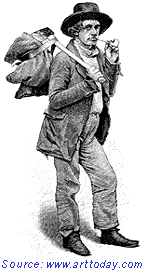
Today, the term hobo often conjures up romantic images of men and women from another era who traveled the country in empty boxcars, unimpeded by worldly goods and pressures, enjoying a life of freedom and independence. I remember as a kid in the 1950s that dressing up as a hobo was one the most popular Halloween costumes; torn and patched old pants and jacket, floppy hat, charcoal or black smudges on the cheeks, and a stick over the shoulder with a handkerchief sack tied on the end. Little did I know of the men and women who actually were Hoboes, traveling by train and living in “jungle” camps. This historical image is seldom seen in today’s healthy economy, but back in the Economic Depression of the 1930s, riding the rails in search of a better life was common.


At the height of the Depression, historians estimate that 250,000 teenagers were transients, who hitched rides on trains, lived in “jungles” or hobo camps--all looking to go anywhere that was different from the impoverished homes they left behind.


Most of the kids were not bums. Any good hobo worth his salt will tell you that bums did not work, they lived on handouts. But Hoboes, sometimes called tramps, traveled to find work, usually looking for agricultural work.

It is believed that the term Hobo is derived from “Hoe-boy,” which described migrant farm workers around the turn of the twentieth century. Hoe-Boys often carried their own tools when they traveled, ready to be employed in any field needing attention. The Hobo culture goes back farther than the turn of the twentieth century and has it’s origins in post Civil War American South. After the Civil War, many who were homeless jumped on the trains for a free ride west to find work. These transients worked on farms, on construction jobs, on gas lines, or on the railroads, where they helped to open the American West.

The stories of the children who left home in the 1930s reveal a complicated set of circumstance that forced them to seek shelter, support, and companionship from others who traveled the rails. Many of the young men and women who left home at an early age did so because of abusive parents and economic troubles, which added to their already uncertain futures. When “the big trouble came,” meaning the start of the depression, many who were on the bottom rung of the economic ladder suffered the most. The children living in the hobo jungles talked about their mothers having married five or six times, each husband treating the kids differently. They talked about drunken parents who took out their frustrations on their children, physically abusing them. And others talked about making the decision to leave home so it would be easier on the younger children, one less mouth to feed. On the road these kids met up with others in the same circumstances and with older men and women traveling the country looking for work. Together, they formed a family where they took care of one another. Some traveled together until a job or different goals separated them. But universally, they shared a common bond, and a support system. In their culture, they developed a unique set of symbols, a language that helped them to find work, to stay away from certain people, to find a place to stay or eat—information from one stranger to another that would help them to survive.


Many of us today have relatives who knew the “freedom of the road. “ My father and uncle were young men when the Depression started. The Depression gave them an opportunity to try and find work in the West, a place the boys dreamed about while growing up on a farm in Indiana. They found work paving roads in Yellowstone National Park. When winter came, they hopped the train and went back to the farm. When the snows melted, they went west again, looking for work in the Parks or on ranches. They never recorded their experiences. Others, however, talked of their adventures as hoboes. Among those were Supreme Court Justice, Willliam O. Douglas (1889-1980) and folk singer and actor, Burl Ives.

The era of the Hobo is over. It is estimated that today there are perhaps 200 such individuals. But, in honor of the culture, each year in Britt, Iowa there is a hobo convention attended by those who “hoboed earlier” in their lives, and by those who just appreciate the freedom symbolized by the Hobo lifestyle. The convention started in 1900 and this year it is estimated that it will draw thousands of visitors.


There is a cultural legacy left by those who were down and out in the 1930s-- folk songs that captured the experience and culture of those who lived on the road. A “Hobo Lullaby” sung by Emme Lou Harris pretty much sums up the life and era of the Hobo.


Click on arrow

Casting Oklahomans in a Negative Light

So, what do John Steinbeck, Sanora Babb and John Grisham have in common?

All three authors used Oklahoma as a backdrop for their stories of social injustice. By so doing, they helped to recast Oklahoma’s image from the West of Indians, cattle trails, cowboys, and settlers, to the lowest common denominator-- a place of homelessness and despair, where ignorant and incompetent people lived.

Most readers recognize John Steinbeck for one of his most popular books, The Grapes of Wrath , and John Grisham for his numerous books about southern lawyers. Grisham’s most recent book is The Innocent Man, a docu-fiction about a murder in Ada, Oklahoma. Few readers, however, will recognize Sanora Babb or her book, Whose Names are Unknown.

If it was not for extreme bad luck, Sanora Babb’s career as an author could have been as successful as John Steinbeck’s. In 1939, Babb was under contract with Random House for the publication of her manuscript, Whose Names are Unknown, a story about a farm family’s struggle to make a living in Oklahoma and California in the Economic Depression of the 1930s. After Babb signed her contract with Random House, she moved to New York to finish her manuscript and prepare it for publication. However, Babb’s story about the Dunne family, who left their farm and sun scorched land in western Oklahoma, is almost identical to John Steinbeck’s story of the Joads and their trek to California from the eastern Oklahoma town of Sallisaw. Before Babb could finish her manuscript, Viking Press released The Grapes of Wrath. The editor at Random House believed that having two books on the market about Depression Oklahoma was not a financially sound idea; he cancelled Sanora Babb’s publishing contract for Whose Names Are Unknown. The editor did, however, offer Babb a contract and advance on her next novel. John Steinbeck’s The Grapes of Wrath won the Pulitzer Prize for fiction.


Of the two books, Whose Names are Unknown
(finally published by the University of Oklahoma Press, 2006) is the most realistic because the author worked and lived among the people of whom she wrote.


Babb in center surrounded by migrant workers.

As a worker for the Farm Security Administration, the New Deal agency that helped farmers in the 1930s, Babb chronicled the lives of farm workers who lived in migrant camps in California-- their personal struggles compounded by a lack of food, medical care, and shelter. Much of what Babb saw in the migrant camps was familiar to her; her father was an itinerant who moved his family around Oklahoma, finally settling with her grandfather in a sod house in Eastern Colorado, where they raised broomcorn. Babb also incorporated into her story information from her mother’s letters about the dust storms in western Kansas.


Sanora Babb

Steinbeck was not from Oklahoma, and many criticize his characterization of the Joad family in The Grapes of Wrath.


Steinbeck

Steinbeck did do his research by visiting Oklahoma and California. And on one trip to the migrant camps in California, Steinbeck met Tom Collins, Sanora Babb’s manager at the Farm Security Administration. Collins borrowed Babb’s notes on the migrants and shared them with Steinbeck. Babb was never sure whether Steinbeck actually read her notes, but it is interesting to speculate.

Both authors in their respective books tell a similar story about a class of people who suffered many deprivations. In The Grapes of Wrath, Steinbeck painted a pretty grim picture of humanity in its most crass condition. Like the Muckrakers of the late nineteenth and early twentieth centuries, Steinbeck condemned the capitalist system that he believed forced some people to suffer on the bottom rung of the economic ladder. Typical of many writers on the left in the 1930s, Steinbeck advocated Socialism and government control of the means of production as an alternative to American Capitalism.

This was also Sanora Babb’s viewpoint, although she did not introduce characters in her book equivalent to Steinbeck’s outspoken Reverend Casy, her subtle descriptions of homelessness, and an economic system that worked against the migrants carefully constructed an argument against the American economic system. It is telling that before Babb started writing her book, she joined the Communist Party. In 1936 she followed like-minded authors to the Soviet Union, where they studied many aspects of the collective communist culture.

As was often the case in economic hard times in the United States, many farmers and industrial workers found Socialism and Communism an acceptable alternative to their perception of a failed American Capitalism. But once the economy started to rebound, freedom of the market place lured most back to the Capitalist system. In Oklahoma, people enjoyed a return to economic prosperity before the rest of the nation because the state was one of the first to receive federal money to build military bases to prepare for America’s entrance into the Second World War.

The American West holds a special place in the minds and hearts of the American people. Many of us grew up watching western adventure on TV and found enjoyable reading in the adventures of mountain men, immigrant wagon trains traveling the Oregon Trail, Indian wars and outlaws. And, as a part of the West, Oklahoma has a colorful history. Indian Territory, in present day Oklahoma, was a favorite hideout for outlaws-- most notable, Belle Starr and the Henry gang. When the federal government started the allotment system and broke up Native American lands, the rest of the Territory was open to white settlement in a series of land runs. Towns sprang up across the Plains and people from all walks of life and from many ethnic backgrounds created “instant” settlements; what wonderful material for any writer to create stories that captivated the American mind. Edna Ferber took up the challenge and wrote Cimarron (1929) around characters and events that mirrored the history of early Oklahoma.


Typically the early history of the state is not the history that is most often celebrated. Instead, the Dust Bowl years and John Steinbeck’s characterization of the people as pitiful losers in the fight for a piece of the economic pie is the image presented to the world, an image wrapped up in one word, Okie.


Okies

In this year of 2007, Oklahoma is celebrating one hundred years of statehood. There are many, many different celebrations planned throughout the year. One such celebration is the National Endowment for the Humanities’ (NEH) Big Read. The Pioneer Library System in Central Oklahoma received a generous grant from NEH for the Big Read program-- the goal is to interest people in reading some of the classic books about the American character. It is up to the grant recipients to pick from a list of award winning books the selection on which their community will focus. The program sponsors at the Pioneer Library decided to build their Big Read program around John Steinbeck’s The Grapes of Wrath. So once again, the Joad family, in all their splendor, is introduced to a new generation of people who have not yet had the opportunity to learn what is meant to be an Okie, and all that the term denotes.

John Steinbeck and Sanora Babb do not have a monopoly on casting the citizens of Oklahoma in a negative light. John Grisham’s An Innocent Man characterizes county officials, prosecutors, judges, leading lawyers and the Oklahoma State Bureau of Investigation’s forensic lab employees as incompetent corrupt boobs, so corrupt that they orchestrated a guilty verdict for an innocent man, who sat on death row for over ten years before a diligent lawyer uncovered the truth.


Grisham’s writing of the story is true to his other books about southern lawyers with a less than favorable characterization of southern people.

It is interesting that casting Oklahoma as a southern state seems to bring out the more negative images. The sharecroppers who migrated from the South through the state to California in the 1930s, the ones Steinbeck and Babb made into Okies, are not seen as a part of the West. Oklahoma as part of the West is seen in Edna Ferber’s Cimarron, and an even more positive image in Lynn Riggs book, Green Grow the Lilac, (1931) which became the basis for Rogers and Hammerstein’s musical Oklahoma. (Opened on Broadway in 1943)

These two cultural icons, The Grapes of Wrath and Oklahoma, present two contrasting images of the state and its people. In some sort of schizophrenic way, Oklahomans seem to identify with both images. In reality, Oklahomans are a very diverse group of people whose ancestors immigrated into the state from all over the country. This migration of Native American, African American and European Americans culminated into an interesting rich cultural mosaic. It is too bad that writers find it necessary to work out their political views on paper with Oklahoma as a backdrop.

Riverboat Travel on the Missouri and the Opening of the American West.

When President Thomas Jefferson sent Meriwether Lewis and William Clark to explore the newly acquired Louisiana Purchase in 1804, one of the goals was to find a water route across the continent to the Pacific Coast. They understood that easier access to trade in the Pacific would be good for the economic well being of the new United States of America. Lewis and Clark did not find a water route to the Pacific Coast, but they noted the importance of developing the Missouri River as a trade link to the Mountain West.


By 1850s, the Missouri River connected the American West to important trade center in the South and East. Goods and supplies traveled on paddle steamers either from the port of New Orleans up the Mississippi River to the Missouri River or from the New York City harbor up the Hudson through the Erie Canal to the Great Lakes. And then from the southern end of Lake Michigan, steamboats could navigate into the Illinois River and on to the Mississippi and Missouri Rivers. Without the river link to the West, economic development would have been difficult if not impossible.


Steamboats started navigation of inland rivers as early as 1811 when the stern-wheeler New Orleans made its maiden voyage down the Ohio to the Mississippi River. The New Orleans was built in Pittsburg for $40,000. It was 116 feet long and 371 tons. The vessel was slow and somewhat cumbersome, patterned after river steamers on the waters of the eastern seaboard. Technological advances over the next couple of decades produced fast maneuverable high-pressure-steam driven paddle wheelers with low drafts that could easily haul large amounts of freight on rivers like the Missouri. Steam wheelers started up the Missouri in the late 1850s.


At first, paddle wheelers did not venture far up the Missouri, riverboat captains were afraid their boats were not suited for the shallow waters. As improvements were made to the vessels, captains maneuvered farther inland on the river until they reached the upper Missouri. At the terminus of the navigable waters of the Missouri, (in present day central Montana) Alexander Culbertson of the American Fur Company established Fort Benton 1846.


Evidently he did so at the request of the Blackfoot who believed a trading facility on the north side of the Missouri River would be advantageous to their trading enterprise. But it was not until 1859 that steamboats started to visit Fort Benton on a regular bases. In that year the Chippewa, especially designed for the shallower up stream channel, was the first to pull into the levee at Fort Benton. For the next decade and a half, Fort Benton was very important to the interior economic development of the Northern Rockies.


The possibility of lucrative trade on the upper Missouri was incentive for individuals to use their capital to construct bigger and better riverboats. This was especially true in the 1850s when the government let out contracts to carry annuities to various Indian Tribes as required by treaty.


Docked at Fort Benton

The government offered attractive contracts to different steamboat companies, the winners were usually the companies who had the most efficient boats and who had the best lobbyists in Washington. When the Chippewa arrived at Fort Benton the cargo was Native American annuities.

The development of Fort Benton as an inland port and depot for goods coincided with the discovery of gold in Montana. In 1862, miners found gold in Grasshopper Creek; the town of Bannock soon grew along the creek to accommodate a growing population of gold seekers in the Beaverhead Valley. After the initial strike, enterprising individuals found gold in streams in other parts of the valley bringing more emigrants and the growth of new towns like Virginia City and Helena, the capital of present-day of Montana. For a time, the gold rush turned Fort Benton into one of the busiest river ports in the nation. Boats arrived on a regular basis carrying passengers, equipment and supplies and returned down river carrying gold bullion, hides and wool.


Fort Benton

Fort Benton also became important to the economic growth of Western Montana, hundreds of miles from the Missouri. From Fort Benton, wagons hauled freight overland to the various cantonments where traders, miners, and eventually settlers, bought their supplies. As early as 1850, John Owen started a trading post in the Bitterroot Valley, 400 miles from Fort Benton. At that time, most of his customers were men who still were active in the fur trade, but who also found a new line of work in trading with emigrants on the on the Oregon Trail.


Fort Owen

Before Owen built his fort, he was a sutler at Fort Leavenworth. He left the fort with a rifle regiment, who was headed to Oregon. The unit wintered at Fort Hall, where Owen resigned his sutler position. It is most likely during his stay at Fort Hall that Owen met and started associating with men who traded on the Oregon Trail. The stretch of the Oregon Trail between Fort Laramie and Fort Hall was long and dry. By the time the wagon trains made it as far as Fort Hall, in present day Idaho, their oxen and cattle were tired and worn out from a lack of good grasses on the dry Plains.The traders bought the cattle at low prices and took them north into Montana, especially into the Bitterroot Valley, where the winters were mild and where there was plenty of grass. The next summer they herded the fattened and rested cattle back to the Oregon Trail or the “Road” as the trail was known, and traded to a new season of emigrants—they typically traded one fattened cow or oxen for two or three tired animals. ( as a side note-- these men started the first cattle herds in Montana) Owen followed the retired fur traders to the Bitterroot Valley, where he saw an economic opportunity to sell trade items and supplies to the numerous mountain men and their families who resided in the valley. (Almost all of these families were interracial; mountain men tended to cohabitate with Native women, many becoming wives) As soon as the steam wheelers started pulling into the docks at Fort Benton, John Owen started making regular trips to the port to receive his supplies. He hauled the freight in wagons over the mountains to the Bitterroot Valley.


To facilitate travel from Fort Benton into the Pacific Northwest, the United States Congress, at the urging of Lieutenant John Mullen, appropriated funds for a road from Fort Benton to Columbia River in 1857. By so doing, there would finally be an easily assessable trade route from one end of the continent to the other. John Mullen led the project. Construction began in 1859; Mullen and his crew completed the project in 1860. The road not only connected Fort Benton to the Pacific Northwest, but to gold fields in Montana and Idaho.

One of the perils of Navigating on inland rivers was that paddle wheelers were vulnerable to accidents that could damage a cargo or destroy the vessel. The Missouri River was especially dangerous because of its shallow waters, swift currents, and narrow navigable channel, which often shifted making it difficult for riverboat captains to navigate; many landed their paddle-wheelers on sand bars. And, sometimes the only way to launch from a sand bar was to wait until the river was once again in high water. The Missouri was also dangerous because of dead trees and snags that could rip through the bottom of the boats. Investors who put capital into the construction of steam wheelers had to realize immediate profit before an accident ruined their economic venture.

A testimony to the dangerous navigation of the Missouri is the numerous wrecks that still litter the bottom on the river, now deep in mud and sand. For example in 2004, up out of the shallow murky waters of the Missouri, emerged the steamboat Montana, a wreck of over 120 years.


The Montana was one of three “mega” boats constructed in 1879 to operate in the upper Missouri. It was the largest boat ever to travel the Mississippi and Missouri Rivers. It was 283 feet long, 100 feet larger than most paddle wheelers of the day. In June of 1879, the Montana unloaded 600 tons of cargo at the levee at Fort Benton. This was the largest cargo ever deposited at Fort Benton. For a brief period, the Montana out paced the railroads in supplying the upper Missouri and paid off investors handsomely. But, the Montana was the last gasp of riverboat travel in the upper Missouri, steamboat traffic cease to exist by 1880. After only six years of operation, the Montana hit a railroad bridge at St. Charles, Missouri. The captain beached the steamer on the southern shore, where over time, it sank into the mud.

It is ironic that a railroad bridge caused the demise of the Montana. The mishap symbolized the end of the importance of river transportation to western commerce, and the beginning of the importance of rail traffic in the national and international economy. The era of steam wheelers running the Missouri lasted only as long as there was no competition in transporting freight to the West. With the passage of the Pacific Railroad act in 1862, and the subsequent construction and completion of the transcontinental railroad, river traffic to Fort Benton began to decline. In the summer of 1867, a record 39 boats docked at the Fort. By 1874, only three made it up river. The Railroads took over where the steamboats left off, supplying goods and transporting people to the American West.

Sinking of the New Orleans 1814

Western Movie Theme Music: Envisioning the American

Music of the American West is really a combination of styles and rhythms inherent to the place and culture of the people who occupied the West, whether Native American, European American or African American. The music represents the cultural heritage of the people who came to call the West home. This music, however, is not the music that expresses the grandeur of the western environment or the image in the American mind of a place called The West. The music that most of us western aficionados associate with Western America is the music composed to accompany the numerous TV and movie westerns of the 1950s and 1960s.

The popularity of TV westerns in the late 1950s and 1960s convinced many in the film industry of the lucrative possibilities of the western genre; film executives outdid each other in their race to produce westerns of epic proportions. By so doing, they helped define the West as an expansive landscape where western characters fought and died on the advancing western frontier. Even though I have seen more western movies than I care to admit, it is not always the movie that leaves a lasting impression, it is the accompanying musical score that brings to mind a feeling and a longing for the many wonderful attributes we have come to associate with The West.

A musical composition can relate many things to its listeners. A composer knows this and spends a lot of time incorporating the right instrument, chord, or phrase to express what he wishes to convey through his music. It really is not unlike an author who uses words to create his images; the composer uses music notation and orchestration. In the end, they both create a piece of art that tells us something about our world. Of the composers who have written musical scores to accompany western movies and TV shows, several stand out for their interpretation of the West-- Russian born Dimitri Tiomkin (1894-1979), American born Jerome Morass (1913- 1983) Alfred Newman (1901-1970, and Elmer Bernstein (1922- ). Of the four, Dimitri Tiomkin was probably the most influential in creating the western theme.

Dimitri Tiomkin was born in Kremenchuk, Russia1894. He studied piano and composition at St. Petersburg Conservatory of music. His first experience with music theatre was in St. Petersburg, where he played the piano accompaniment to Russian and French silent films. Tiomkin immigrated to New York in 1925, where he worked with different theatrical and ballet companies. His big break came in 1931 when Universal Studio hired him to score the Russian themed movie, Resurrection, his first non-musical film. Through his long tenure as a composer, he scored over 100 movies, which included Mr. Smith Goes to Washington, 1939), The Westerner, (1940), It’s a Wonderful Life, (1947), Red River, (1948), The Big Sky, (1952) and The High And The Mighty (1955). And, he wrote the scores for such classic westerns as High Noon, (1952), Gunfight at the OK Corral, (1952) and the TV series, Rawhide, (1959-1966).

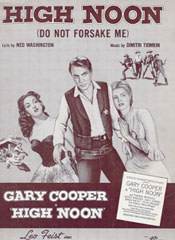
High Noon is what has been called a classic western in that the story has all the elements that we have come to associate with the western genre—good v. evil, or the advance of civilization and the conflict when civilization meets up with the savage West. And, the hero who has to choose between the fair haired schoolmarm from the East, or the dark haired woman who knows her man but is too indigenous to the West to get her man. Just as popular as High Noon was in the 1950s, so to was the theme song that introduced the movie, “Do Not Forsake Me.”


“Do Not Forsake Me,” was one of the most popular movie songs of the era and the winner of an Oscar in the category of the Best Original Music. The producers of High Noon also saw the commercial possibilities of recording the song for the growing pop music market--the production company made a considerable amount of money from royalties. High Noon set the trend and other film producers soon followed. Between 1950 and 1954 only thirteen percent of American feature films used theme songs in their openings. But by the 1960s, twenty-nine percent of movies opened with theme songs—the biggest rise taking place within the western genre. “Do Not Forsake Me” was popular with the listening public for two reasons—Dimitri Tiomkin’s musical score and Ned Washington’s lyrics.

When listening to “Do Not Forsake Me,” one cannot mistake the western flavor of the song. Tiomkin opened the composition with the constant rhythm provided by a percussion instrument, the Tom Tom. After a couple of measures of the lone Tom Tom, the slow strum of guitar chords introduced the lyrics. Throughout the song the Tom Tom continued the rhythm in the background while the guitar, harpsichord, and harmonica played softly in accompaniment to the melody and the lyrics.

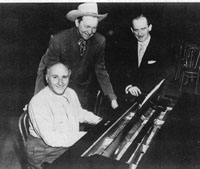
Ned Washington’s lyrics informed the listener of the struggle in the story of the main characters, who were forced to come to terms with the reality of the upcoming shootout in the street. Added to this winning combination of music and lyrics was the performance of “Do Not Forsake Me” by Tex Ritter. His western (Oklahoma) twang authenticated the “West” feeling of the song and added to its overall appeal.

Tiomkin, Tex Ritter and Ned Washington

High Noon 1952


Ned Washington wrote the lyrics to many of Dimitri Tiomkin’s musical scores. In 1952, Tiomkin wrote another classic western song for the theme to Gunfight at OK Corral starring Burt Lancaster, Kirk Douglas and Rhonda Fleming.


Again, Washington’s lyrics summarize the story line of the movie. And in the musical score Tiomkin employs the same rhythmic techniques in the background as he did in High Noon. The beginning overture to the movie, however, is more intense than High Noon. A full orchestra begins Gunfight at OK Corral with a strong forte’ crescendo that creates tension and energy but quickly fades out to a lone whistler beginning the melodic line. Accompanying the melody is the constant background rhythm that mocks horse huffs on dry clay earth.


The listener cannot help but imagine men on horses riding steadily toward town. Added to this is what Tiomkin must have imagined to be a truly western attribute to the music, short musical bridges between different sections imitating Native American rhythms associated with warriors and the preparation for conflict. In the movie, these bridges serve as a transition in time and place. Frankie Lane recorded the song.


click on icon to go to YouTube for the song.


Probably the most popular song for Frankie Lane was the theme to the TV series, Rawhide, another Dimitri Tiomkin musical successes. There is again a constant background rhythm played against Ned Washington’s lyrics, which sum up the gist of the program—the lonely cowboy tending to the herd. The listeners can almost see the cowboy’s rawhide whip snapping in the air as he yells, “move’em out.”


Tiomkin’s constant rhythm in the background of Rawhide however, is not instrumental but performed by backup singers who add the same western flavor to the song as Frankie Lane’s rendition of the lyrics.

Rawhide—1959-1966


In 1958 Jerome Moross wrote the score to another successful western, (and one of my favorites) The Big Country staring Gregory Peck and Jean Simmons.


Moross was another accomplished musician who wrote musicals, ballets and concert pieces. He was born in New York City in 1913. As a child, he studied piano and graduated from the New York School of Music at age eighteen. As a senior he held the Julliard conducting fellowship and was awarded the Guggenheim Fellowship in 1947-48. He is probably most known for his song, “Frankie and Johnny.”

He started his career in Hollywood first as an orchestrator for films in the 30s and 40s and by 1948, as a composer. Of the western films he scored, Big Country is the best known. Biographers wrote that Moross’s western musical style was shaped from his experience in the Great Plains in 1936 while traveling by bus from Chicago to California. Moross explained, “as we hit the Plains, I got so excited that I stopped off in Albuquerque and the next day I got to the edge of town and walked out onto the flat land with a marvelous feeling of being alone in the vastness with the mountains cutting off the horizon. When it came to writing the main title of the film, I wrote the string figure and the opening theme almost automatically.” The main theme to Big Country reflected Moross’s wonder at the grandeur of the West.


The opening theme to Big Country starts with full orchestra, at double forte’, stings carrying the background rhythm. The music goes from forte’ to a quieter melody line played by strings, but in the background bass instruments bring home the driving rhythm until the orchestra comes in again at full force, the bigness of the country expressed in the music can not be missed.


Elmer Bernstein was another successful composer who has many movies to his credit; most recognizable is The Magnificent Seven.


Bernstein was born in New York City in 1922. He was multitalented, as a young man, he performed as a dancer, actor and artist, winning several prizes for his paintings. He also studied piano with a teacher from Julliard School of Music. In his long career, he was nominated fourteen times for an Academy Award and in 1967 won for his score of Thoroughly Modern Millie. His other nominations were The Man with the Golden Arm, Summer and Smoke, To Kill a Mockingbird, The Return of the Seven, Hawaii, True Grit, Walk on the Wild Side, just to name a few.

Like musical scores of other westerns, Bernstein opens the score to The Magnificent Seven with full orchestra, which quickly moves into a strong rhythmic background lead by percussion and brass. Bernstein introduces a variation to the western theme with his use of Latin rhythms in the percussion and guitar, which incorporated the Spanish flavor of the American Southwest. Throughout the theme, strings and woodwinds play the melody against the constant and strong background beat.


Mignificient Seven 1960

The musical style used by Dimitri Tiomkin influenced others who followed Tiomkin with their own musical compositions written to accompany The Western. Most apparent in the different western movie themes was the constant beat in the background that imitated Native American rhythms. Also, the use of percussion instruments to give special effects like galloping horses, and incorporating such folk instruments as the guitar, the harmonica, and the whistle into the score produced a unique sound that became associated in the American mind with the music of the American West.

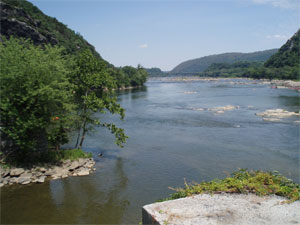
There is one other song that is almost synonymous with westward immigration and has been incorporated in many western scores—“Shenandoah.” The song has been around since early America, but there seems to be quite a bit of debate about the origins of the song. One popularly accepted explanation, taken from a 1931 book on sea and river chanteys by David Bone, has the songs origins in Virginia. Bone maintained that, “Oh Shenandoah” originated as a river shanty song and became popular with crews on sea faring vessels in the 1800s, basically a boatman’s song. Another more feasible explanation is that it originated with Scot-Irish settlers and the lyrics referred to their term of confinement as indentured servants. “The seven (long) years since I last saw you” was the common term of indenture servitude in early America. Over the years, the song has been known by different titles including, “Shennydore”, “The Wide Missouri”, “Across The Wide Missouri”, “The Wild Missourye”, “The World of Misery”, “Solid Fas”, “Rolling River” and “Oh Shenandoah.”


At any rate, by the 1950s and 60s, “Shenandoah” was solidly anchored in the American music culture. The Kingston Trio wrote their popular version of the song and included it in their albums and concerts. But, probably the person to reintroduce the song into American music culture was Alfred Newman, who incorporated the song into his score of the epic western, How the West Was Won. The listener cannot help but feel the arduous journey westward with such lyrics as, “Away, Bound Away, A Cross the Wide Missouri.”

In 2006, Bruce Springsteen released yet another version of Shenandoah on his album, “We Shall Overcome: The Seeger Sessions.” Springsteen’s arrangement of the song, and the instrumentation, gives the song the “feel” of western migration. The song opens with the slow and soft chords of the guitar and fiddle. Gradually the music builds as the accordion and banjo take over. As the introduction continues to build, the banjo player plucks slow distinct chords that give the listener the feel for the rhythm of the river. The music begins to build as Springsteen sings the familiar lyrics. The listener cannot help but feel the energy of the song as Springsteen brings the song to climax and the music begins its fade to the soft chords at the end. What ever the origins of the song may be, Springsteen’s interpretation gives the listener the distinct feeling “Of the Way West.”


Music is timeless and how one interprets music is an individual experience. For me, whenever I hear a theme from one of the many westerns of the 1950s and 1960s, I imagine the large landscape and beautiful mountain vistas of Western America. But, the music also relates the conflicts inherent in settling the land. Just as it was all played out on the “big screen,” it was also played out in the musical score that accompanied the action.